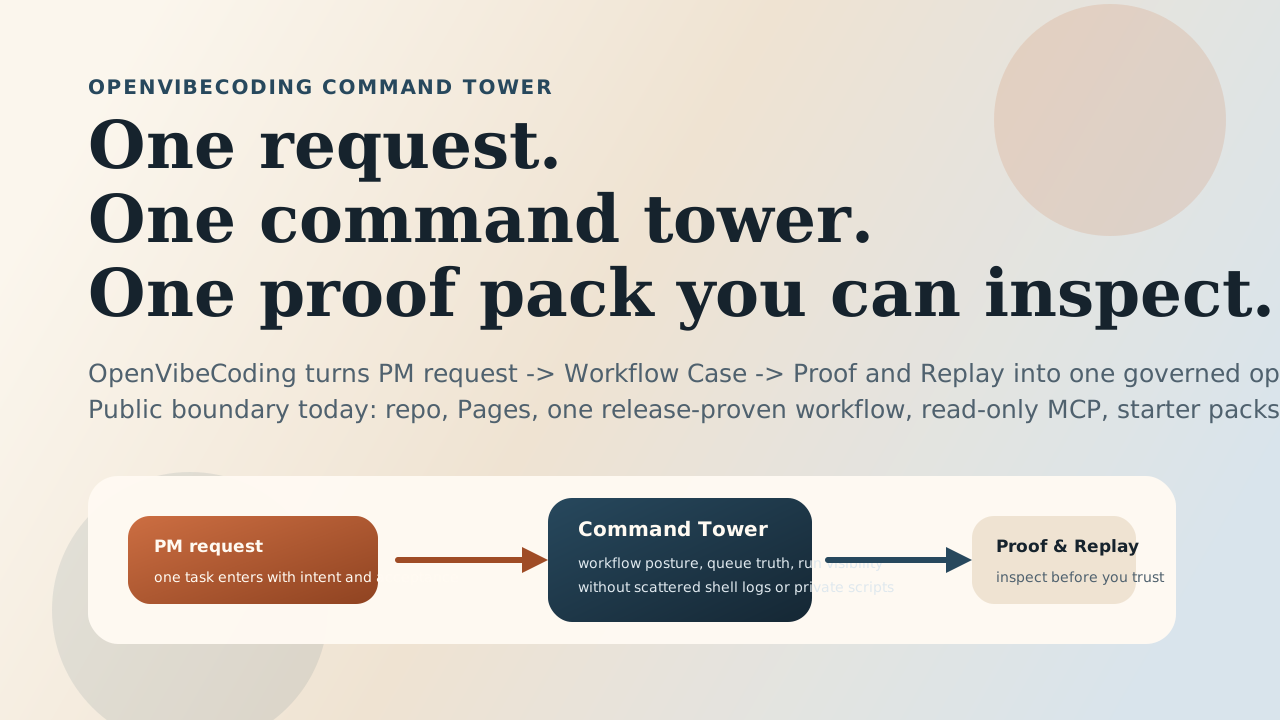
Stop babysitting AI coding work. OpenVibeCoding is the command tower for AI engineering.
AI coding does not lack models. It lacks a command tower. It helps teams
plan / delegate / track / resume / prove long-running work across
Codex and Claude Code by turning PM request -> Workflow Case -> Proof & Replay
into one governed command-tower loop.
Current boundary: OpenVibeCoding is a repo-backed operator control plane, not a hosted product,
and the shipped MCP surface remains read-only.
Official distribution today is the public repo, the Pages front door, one proven workflow
baseline, the repo-local read-only MCP server, and local starter or bundle material. The
thin client and contract packages are publish-ready but not published yet, while the shared
package stays workspace-only, so no public package release, hosted operator, Docker image,
or public write-capable MCP is live today.
The public story should stay simple: one request enters, one Workflow Case becomes
visible, and one Proof & Replay surface stays inspectable before you trust the
result.
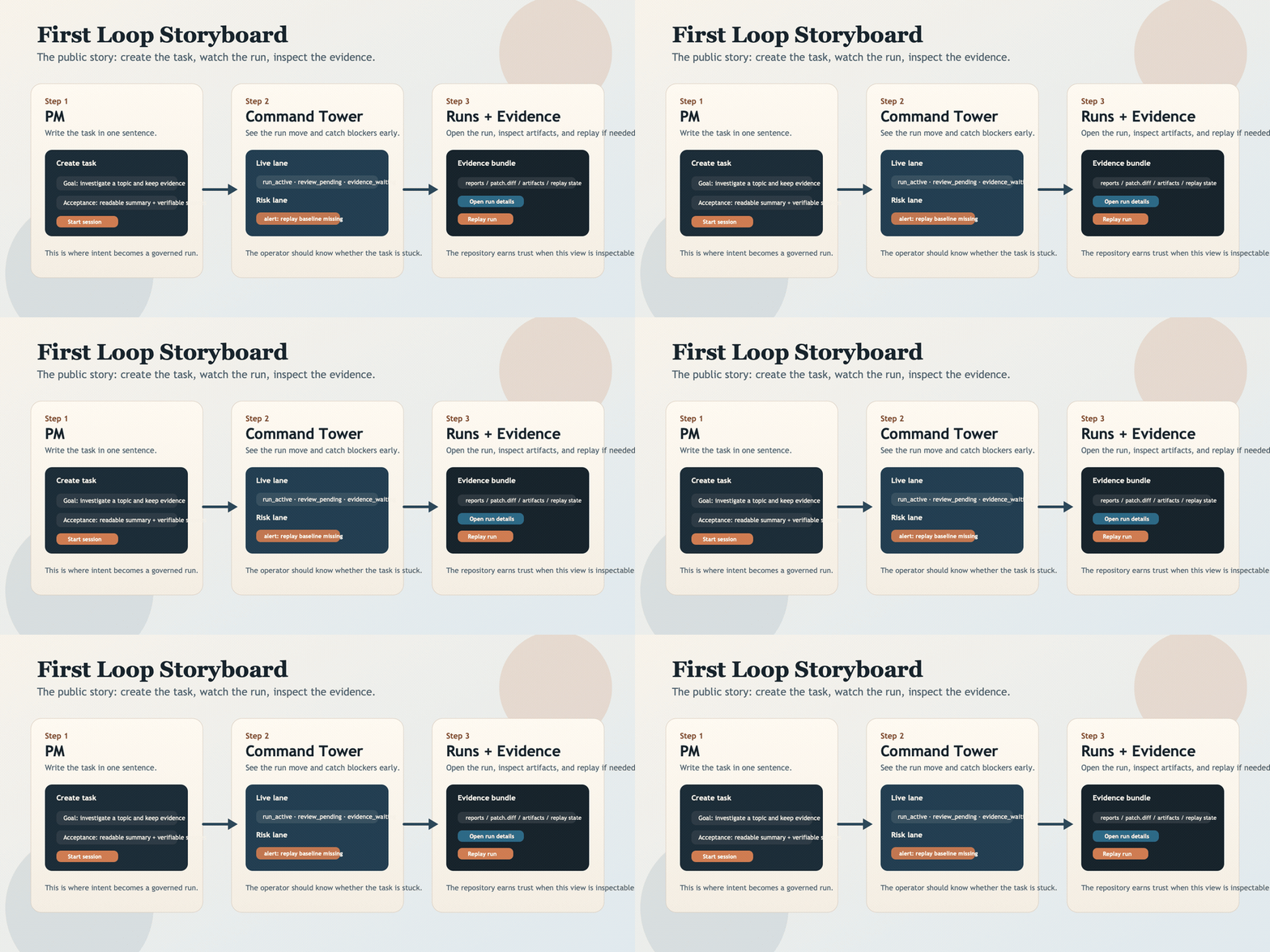
This tracked storyboard is the shareable first-loop asset: it shows the same public
path the README, Pages, and release notes are promising.
Official distribution story today
Shipped now
Public repo, public Pages front door, proof-first docs, one read-only MCP surface, the legacy-branded live PyPI package plus Official MCP Registry entry for that runtime, and the live ClawHub skill are the official distribution core today.
Starter-only
Codex and Claude Code starter kits plus the local bundle examples are still adoption helpers, not automatic first-party listings.
Submitted externally
MCP.so still has an open public submission receipt, while the previous OpenHands/extensions submission is closed without a live listing.
Explicitly deferred
Hosted operator service, write-capable MCP, Docker distribution, and standalone npm releases still sit outside the current official promise.
Need the exact shipped/starter/internal/deferred ledger instead of the short version?
Open the
distribution status.
Why teams take OpenVibeCoding seriously
Prompt Engineering
Write the right worker brief, scope, constraints, and deliverables instead of hoping one giant prompt will keep a long task on track.
Context Engineering
Keep the right material in the right head: Workflow Cases, role bindings, queue posture, and handoff context stay explicit instead of rotting inside one session.
Harness Engineering
Move work through contracts, approvals, runtime bindings, and proof surfaces so the system can keep operating safely instead of gambling on model behavior.
FAQ
Is OpenVibeCoding an official Codex or Claude Code plugin?
Not today. OpenVibeCoding is the current repo and product surface. Codex now has official plugin surfaces and OpenClaw has official plugin and skills surfaces, but the current public story still ships workflow-aligned integrations, repo-owned skills, read-only MCP, and local bundle examples rather than a published listing.
Is the public MCP surface write-capable?
OpenVibeCoding's current public MCP contract is read-only, and write-capable mutation remains outside the public promise.
Where does OpenClaw fit today?
OpenClaw stays in the adjacent coding-agent layer. New teams should use the compatibility matrix, integration guide, and repo-owned skills path before implying a shipped native plugin.
What should a new team open first?
Start with the compatibility matrix if the main question is which adoption path fits your stack. Then choose read-only MCP, skills, builders, or the first success path based on the real job.
Choose your path
New here? Keep the first decision simple: start with one proven workflow, choose the right adoption path,
then open deeper protocol or builder pages only after the job is clear.
I want one proven workflow first
Start here if you want the shortest honest story: one public baseline, one proof pack, and one share-ready Workflow Case recap before you read internals.
This local full-stack path boots the orchestrator API on localhost together with the dashboard, so the browser can exercise the operator loop without relying on a browser-side bearer token.
In practice, a clean first pass should take about 5-10 minutes and end with four visible signals:
one request created from PM, one case visible in Command Tower, one Workflow Case you can confirm,
and one Proof & Replay surface you can inspect before trusting the result.
If the API is already running in another terminal, you can still use npm run dashboard:dev
for dashboard-only iteration on the web shell.
Official first public path: start with news_digest if you want the smallest release-proven
proof loop. Treat topic_brief as a public showcase expansion, and treat
page_brief as a tracked browser-backed proof expansion that still is not the official
first public baseline or equally release-proven with news_digest.
news_digest
Best for the fastest proof-oriented first run with one topic, a few domains, and a short time window.
Proof state: official public baseline.
topic_brief
Best for a bounded topic brief when you want search-backed evidence without broadening scope.
Proof state: public showcase, not yet equally release-proven.
page_brief
Best for a single URL with browser-backed evidence and a read-only workflow case wrapper.
Proof state: tracked browser-backed public proof bundle; not the official first public baseline.