BrewMe
See It Fast
If the README is the front door, this page is the shop window.
This page is for fast evaluation. It is not a hosted demo, cloud sandbox, or one-click trial.
The goal here is simple:
- show what BrewMe feels like when you read it
- show what the finished output actually looks like
- let you decide whether it is worth a deeper evaluation
If you like what you see here, the next step is run it locally, not “open the live app.”
The 20-Second Mental Model
BrewMe is not just a summarizer.
It is a full intake-to-reading loop:
- sources come in from YouTube, Bilibili, and RSS
- a job-backed pipeline processes each item into a readable surface
- operators read the result in a calm timeline flow
- agents reuse the same evidence through API and MCP
The source story is intentionally uneven on purpose:
- YouTube and Bilibili are the strongest supported intake templates today
- RSSHub and generic RSS are real substrate paths, but they remain more generalized than the strongest video-first flows
The Three Surfaces That Matter First
1. Reader
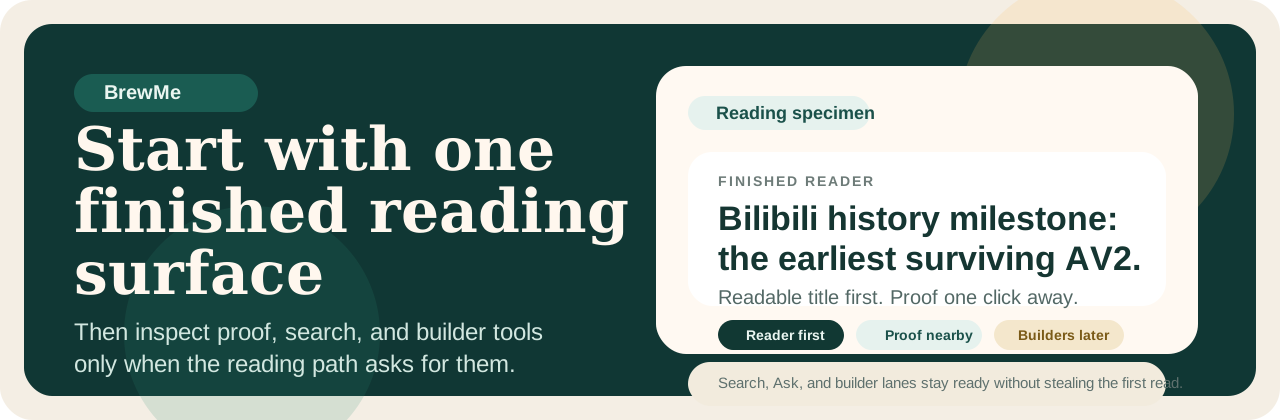
This is the finished reading surface.
What you should picture:
- one finished reading surface
- one clear title worth opening
- source identity and proof nearby, not in front
- a calm desk instead of a dashboard
Why it matters:
- it proves the repo is trying to become a reading product, not just a processing pipeline
2. Timeline
This is the reading desk.
Representative current feed shape:
- title:
Bilibili history milestone: the earliest surviving AV2 - source label:
Bilibili · archive reading - category label:
Misc - body path: finished reader note plus nearby proof
Why it matters:
- the output is meant to be read as one calm story, not just stored as pipeline exhaust
3. Proof
This is the evidence surface.
What you inspect here:
job_id- status and pipeline final status
- step summary
- retry count
- artifact references
Why it matters:
- when something fails, you can debug with receipts instead of guesswork
What The Result Looks Like
BrewMe’s reading artifact template already tells the story of the output shape:
# <title>

> Source: [Original video](<source_url>)
> Platform: <platform> | Video ID: <video_uid> | Generated at: <generated_at>

## One-Minute Summary
<tldr>

## What This Covers
<summary>

## Key Takeaways
<highlights>
That is the key idea:
- not just transcript text
- not just one collapsed summary blob
- a reusable artifact with traceable structure
The 60-Second Evaluation Path
If you want confidence without booting the full stack yet:
- Read README.md for the public story.
- Read proof.md for the evidence ladder.
- Read start-here.md if you want the shortest truthful local run.
- Read samples/README.md if you want the clearly labeled sample corpus path.
- Read architecture.md only after the front door and proof feel clear.
If you want a real local run after that, go to start-here.md.
If You Are Here As A Builder
Do not start here by default. Start with the reader-first sample first, then open the builder lane on purpose:
Builder Off-Ramp
If you are here as a builder, leave this page early and use the builder surfaces on purpose: